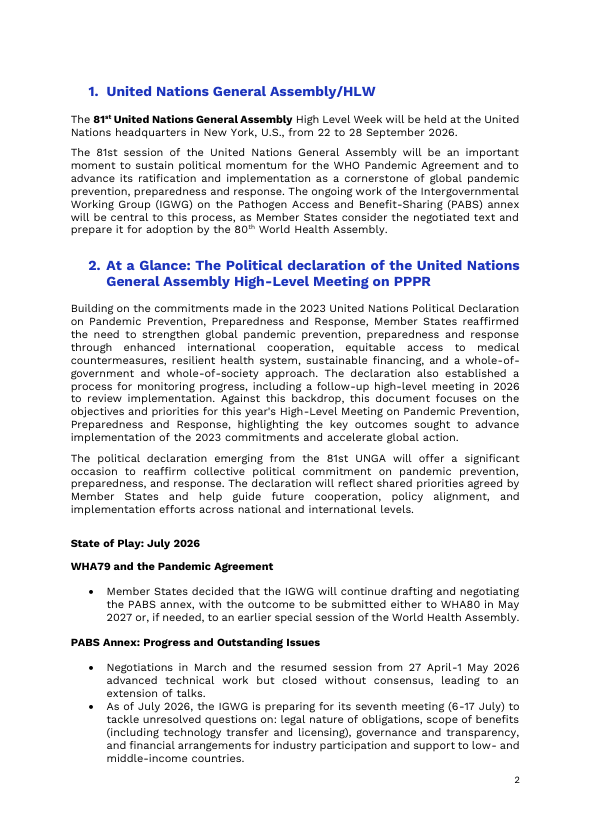

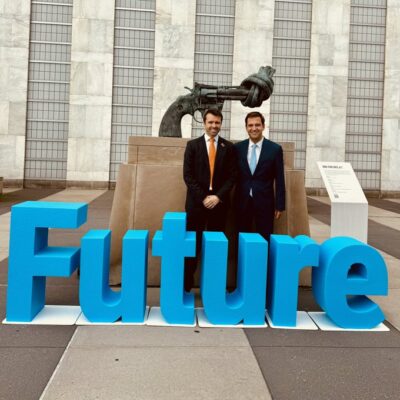
From 22 to 28 September 2026 the 81st United Nations General Assembly High Level Week will be held at the United Nations headquarters in New York, U.S.
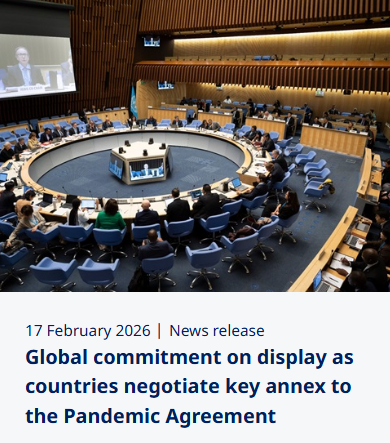
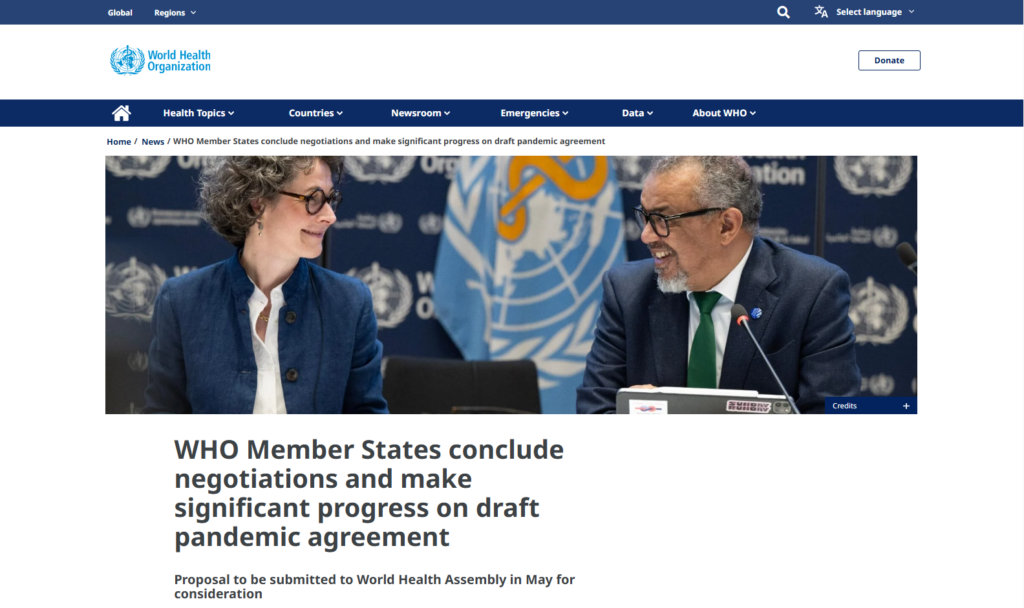
The High-Level Meeting on PPPR on 25th September will be an important moment to sustain political momentum for the WHO Pandemic Agreement and to advance its ratification and implementation as a cornerstone of global pandemic prevention, preparedness and response. The ongoing work of the Intergovernmental Working Group (IGWG) on the Pathogen Access and Benefit-Sharing (PABS) annex will be central to this process, as Member States consider the negotiated text and prepare it for adoption by the 80th World Health Assembly in May 2027.
UNITE calls on all its members to Join Your Delegation and attend the UNGA week.
Political Declaration and outcomes of the PPPR High Level Meeting:
Building on the commitments made in the 2023 United Nations Political Declaration on Pandemic Prevention, Preparedness and Response, the political declaration emerging from the 81st UNGA will offer a significant occasion to reaffirm collective political commitment on PPPR. The declaration will reflect shared priorities agreed by Member States and help guide future cooperation, policy alignment, and implementation efforts across national and international levels.