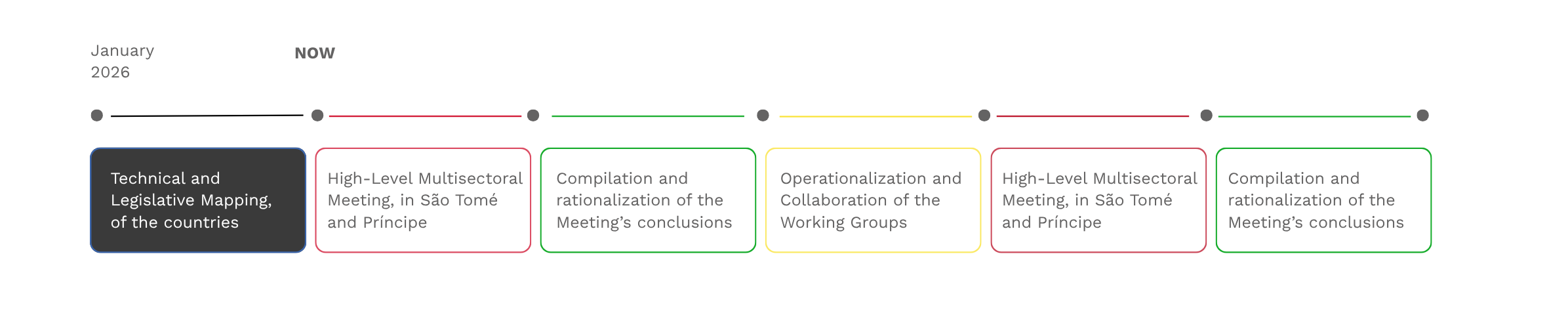
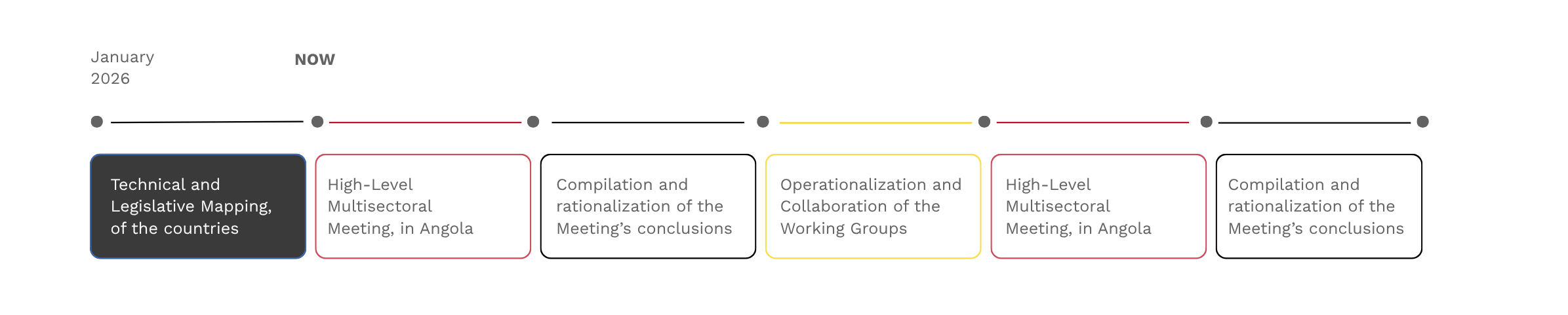
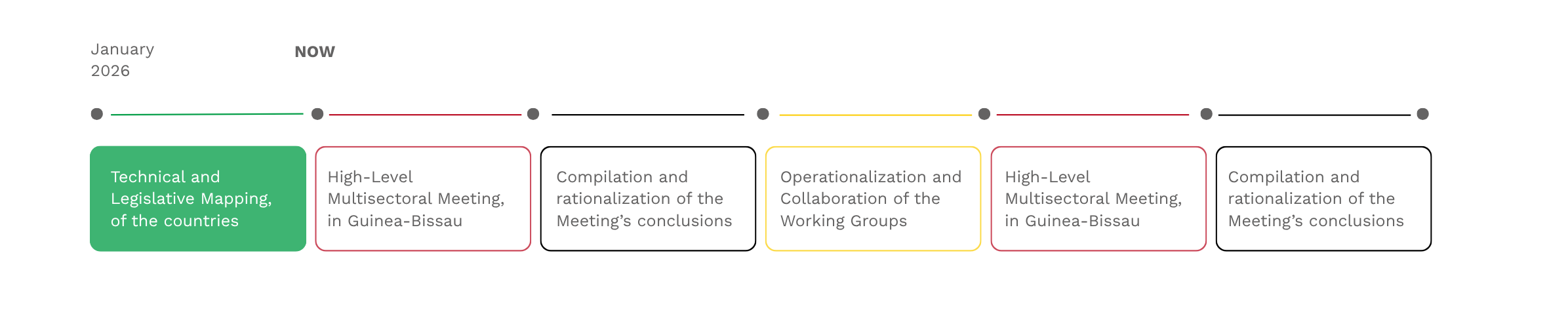
UNITE’s Mental Health Policy Desk is a platform supporting the development, review, and promotion of mental health policies and legislative frameworks. Its work is aligned with the WHO guidance Mental Health, Human Rights and Legislation: Guidance and Practice (2023) and focuses on the Portuguese-speaking African countries (PALOP), through technical and political analysis, structured parliamentary engagement, collaboration with national WHO offices, and multi-stakeholder processes.
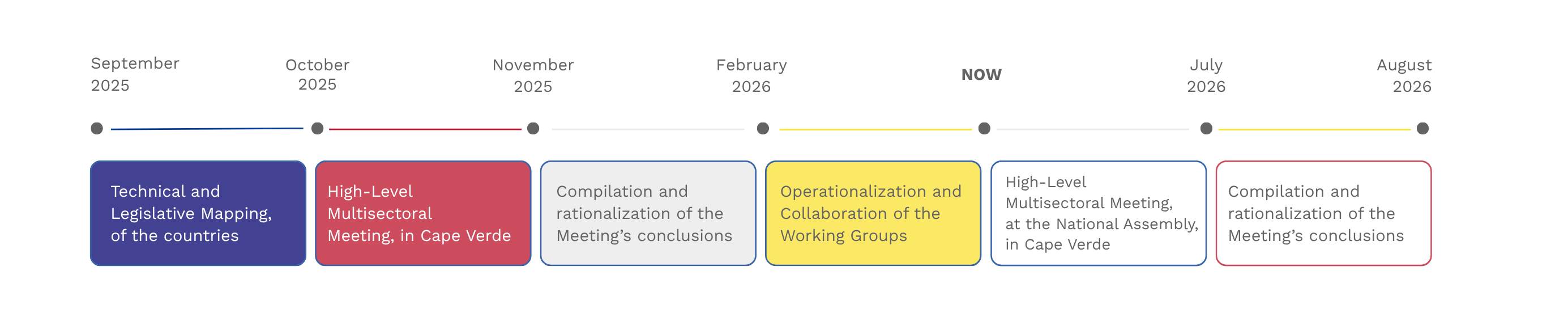
Since its launch in September 2025 during the United Nations General Assembly in New York, the Desk has worked to strengthen political leadership and evidence-based policymaking in mental health, creating the conditions for sustainable legislative impact. The initiative runs until December 2027, ensuring the sustainability, monitoring, and visibility of implemented actions.
Identify key stakeholders (parliamentarians, experts, civil society, people with lived experience) and analyze existing mental health policies and legislation.
Establish collaboration with WHO country offices and other technical institutions.
Organize multi-stakeholder discussions to align priorities and generate actionable recommendations.
Support the creation of evidence-based legislative proposals, recommendations, and oversight tools.
Provide technical assistance to parliamentarians on legislative initiatives, questions, and policy reviews.
Organize targeted advocacy efforts and high-level meetings to achieve measurable political impact.
Deliver ongoing training and capacity-building for parliamentarians and decision-makers on mental health.
Track progress, ensure visibility of results, and support long-term implementation through 2027.
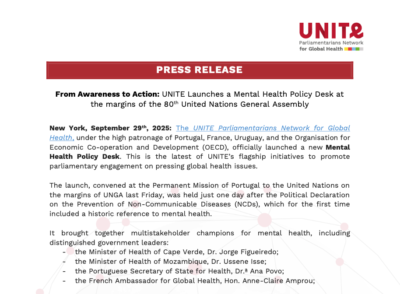
The Mental Health Policy Desk was officially launched on 26 September 2025 at the Permanent Mission of Portugal to the United Nations in New York, during the 80th UN General Assembly.
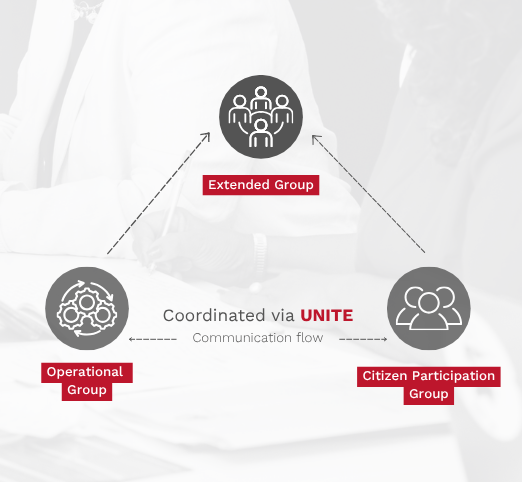
Following the regional launch of the Policy Desk on 24 October 2025 in Praia, and building on the conclusions of the meeting, the Desk supported the creation of a national working group on mental health to advance the review of Cape Verde’s mental health framework.
The working group operates across three complementary levels:
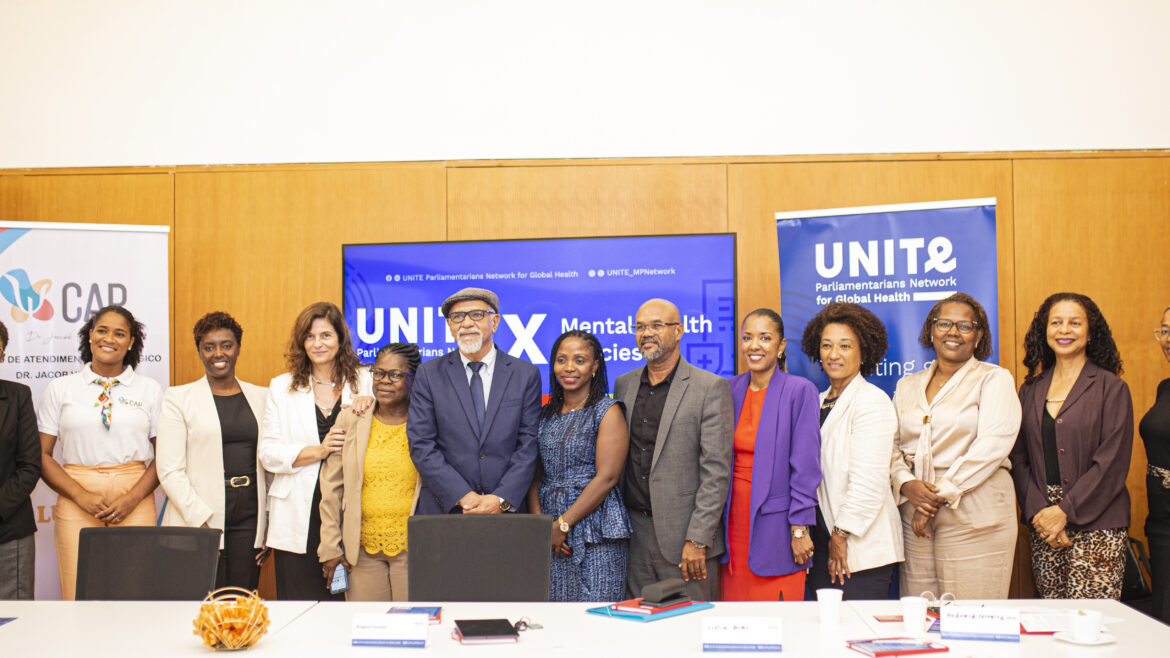
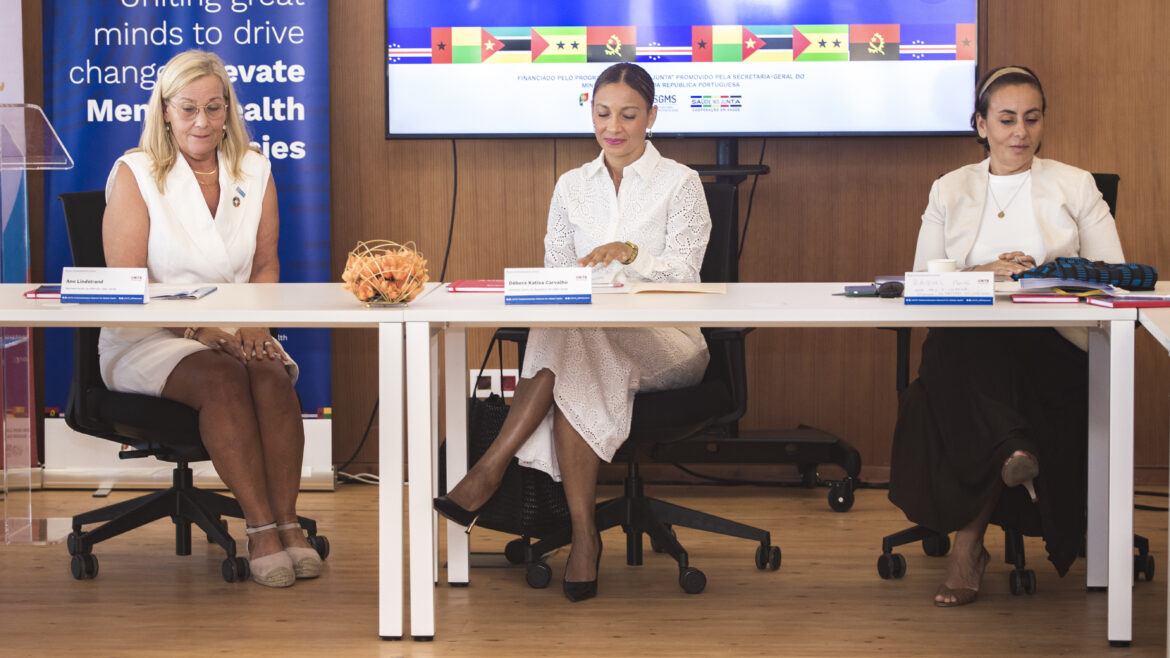
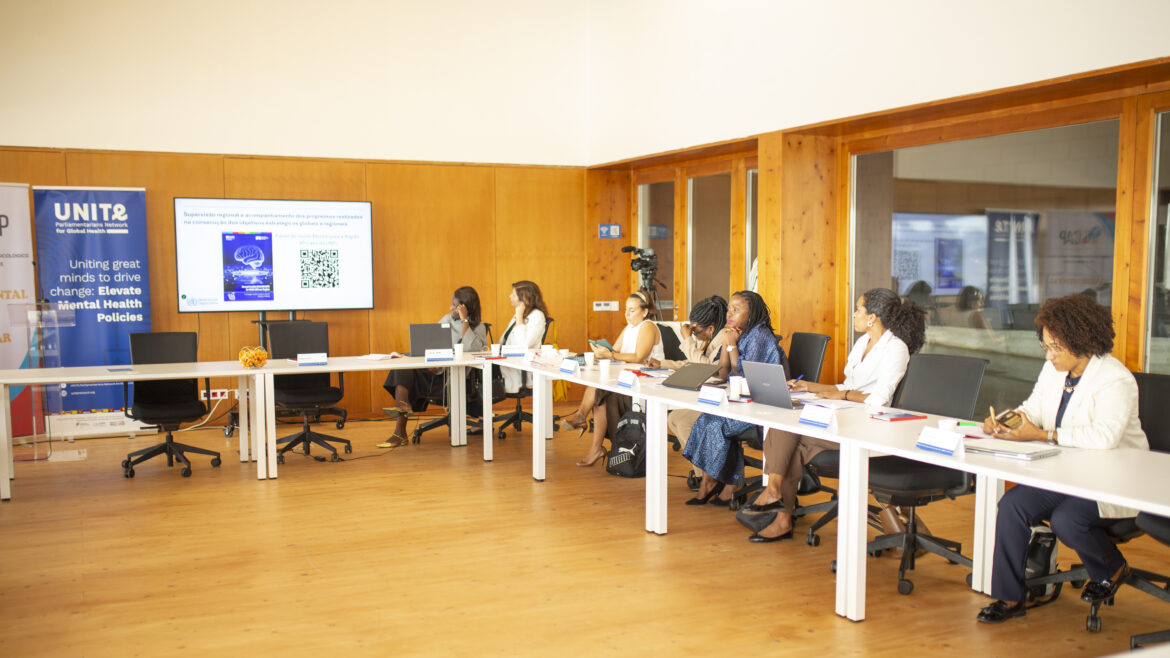
The Desk’s regional launch in the PALOP took place on 24 October 2025 in Praia during the high-level multisectoral meeting “Minds in Action: Leadership and Mental Health Policies in the PALOP”. The event aimed to formally launch the Mental Health Policy Desk in the region, review Cape Verde’s Mental Health Law (Law No. 37/VIII/2013), and identify key legislative and policy priorities for advancing mental health governance in the PALOP.
The meeting brought together parliamentarians, government representatives, civil society, academia, and international partners, creating a platform for regional dialogue and cooperation on mental health. High-level attendees included the WHO Representative in Cape Verde (1st), the First Lady of Cape Verde (2nd), and the Cooperation Attaché of the Embassy of Portugal in Cape Verde (3rd).
Parliamentarians involved:
Institutions represented:
Conclusions of the Event
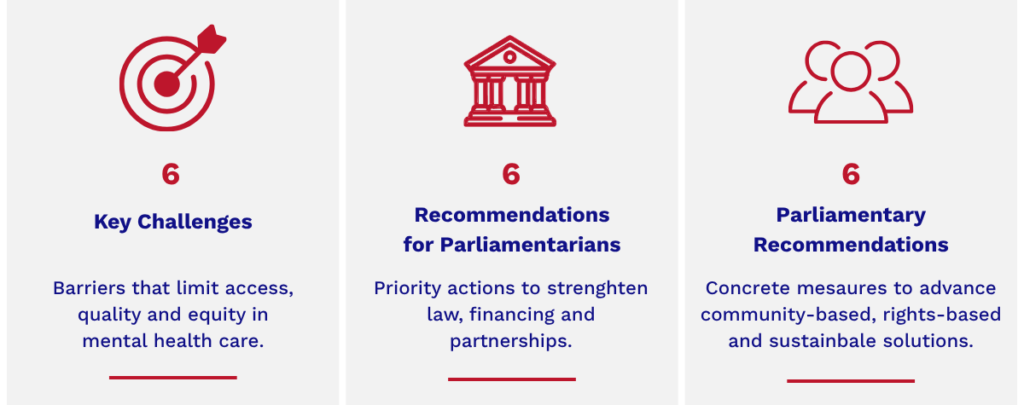
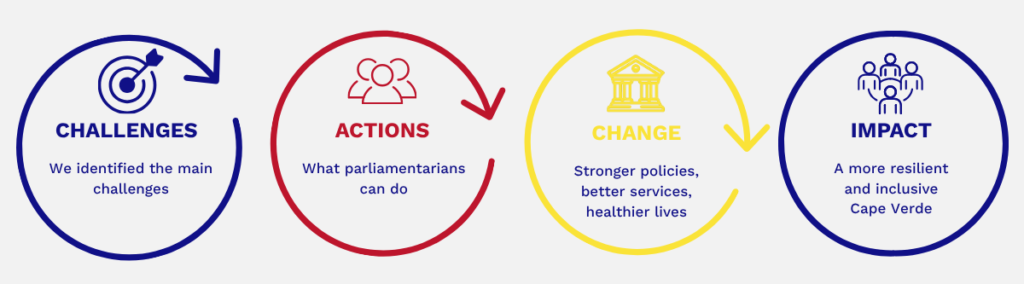
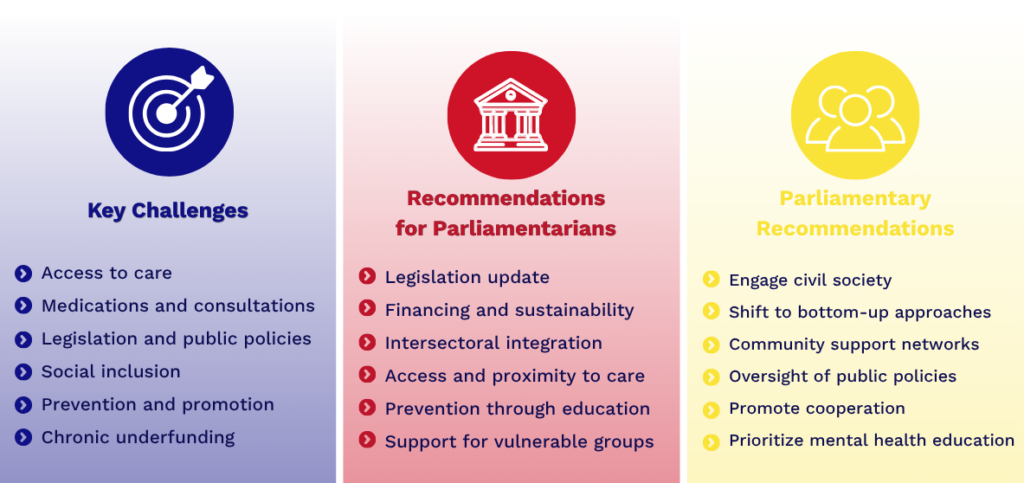
Following the regional launch of the Mental Health Policy Desk in Praia on 24 October 2025, the Desk and national stakeholders identified key challenges and priorities in Cape Verde’s mental health landscape.
insufficient specialized services in major urban centers and limited qualified human resources and training opportunities
frequent informal circulation and self-medication
lack of clear regulation and active oversight body and Mental Health Law (2013) is limited and non-participatory
limited psychoeducation and community awareness
lack of specialized programs in schools for emotional wellbeing
less than 1% of health budget allocated to mental health
revise and update the Mental Health Law to make it more participatory, promotion-focused, and aligned with international standards; establish monitoring mechanisms to access practical implementation
ensure adequate funding and guarantee state coverage for psychology consultations to expand access
incorporate mental health into education, employment, social protection, justice and community policies; and promote formal partnerships between government, civil society, private sector and community policies
expand mental health services to all islands and rural areas, and invest in multidisciplinary teams with culturally adapted care
promote awareness campaigns, combat stigma and improve mental health literacy; integrate wellbeing and mental health into school curricula and community programs
prioritize interventions for youth, women, elderly, LGBT, migrants and homeless populations; and develop protocols for specific risks
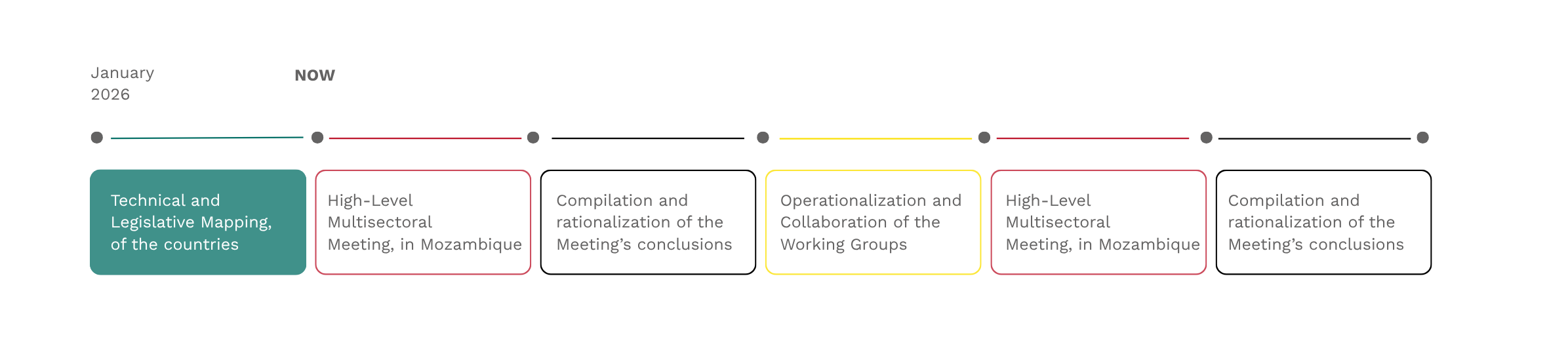
The Mental Health Policy Desk is currently completing the initial technical and legislative mapping in each country to support future political engagement. This work includes analysing the legislative framework, assessing existing mental health programmes, and mapping key institutional and parliamentary actors.
3 MPs
4 partners
5 MPs
4 partners
11 MPs
13 partners
The country presents a particularly complex context due to recurring political instability and fragile state institutions. Recent institutional tensions have limited the feasibility of structured parliamentary and legislative engagement. In this context, the Mental Health Policy Desk is maintaining a cautious and exploratory approach, closely monitoring political developments and identifying potential entry points for future engagement once conditions allow for more structured dialogue.

Chevron’s sponsorship of UNITE’s Mental Health Policy Desk exemplifies a committed approach to mental health as a critical pillar of global health and the sustainable development goals (SDGs).
In her message to celebrate the desk’s Launch, Dr. Huma Abbasi perfectly summarized the importance of Chevron’s collaboration with UNITE. Given that people spend much of their waking hours at their workplace, it becomes a key environment for workers physical and mental well-being.
Employers must prioritize healthy work environments to avoid the repercussions of poor mental health, such as decreased employee satisfaction, lost productivity, absenteeism, and turnover.
Dr. Abbasi also highlighted Chevron’s dedication to fostering a mentally healthy workforce, which has earned the company:
Chevron’s commitment to employee mental health and work-life balance is evident. At UNITE, supported by Chevron, we aim to catalyse political momentum, promote legislative reforms, and secure sustainable investments in mental health systems, reinforcing our shared dedication to advancing SDG 3 (Good Health & Well-being) and SDG 8 (Decent Work).
If your organization is interested in supporting the work of our Mental Health Policy Desk, please reach out to our Desk’s Lead, Lídia Biai lidia.biai@unitenetwork.org