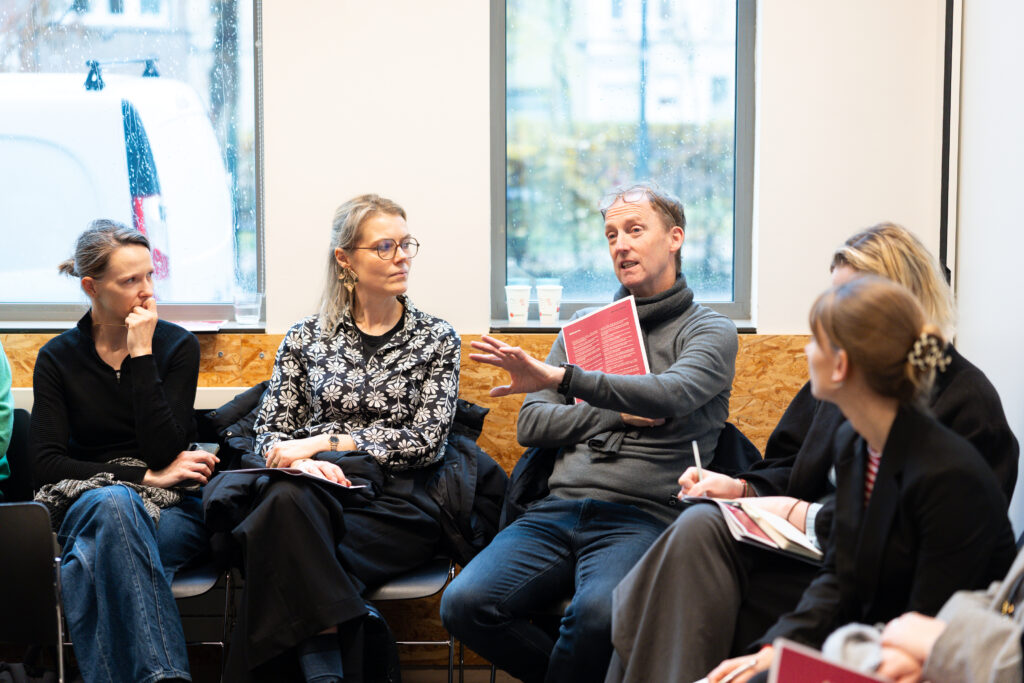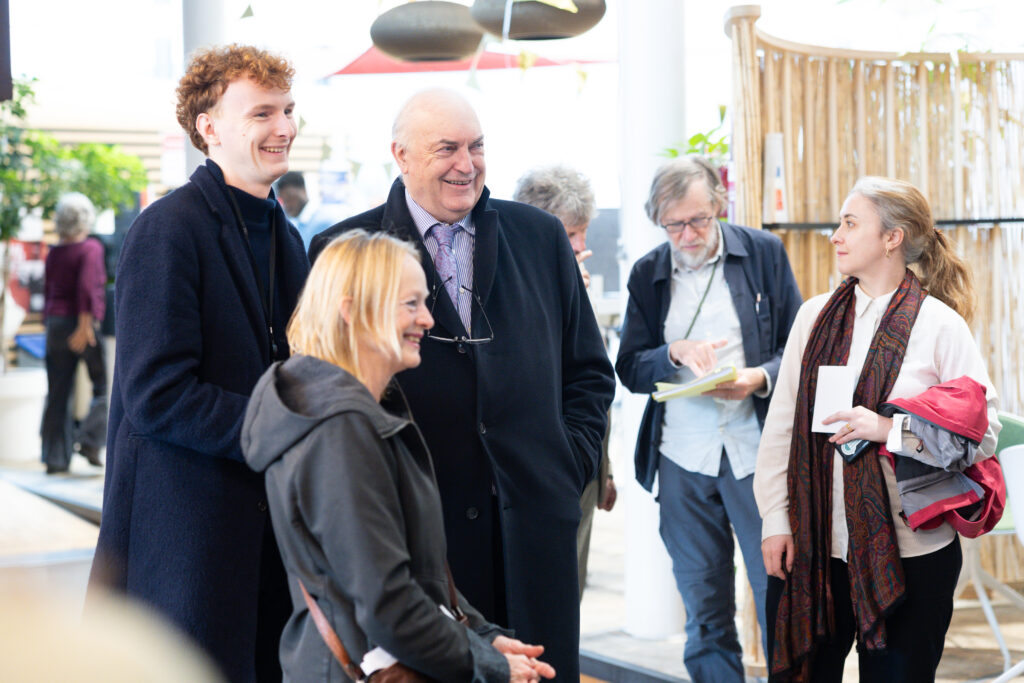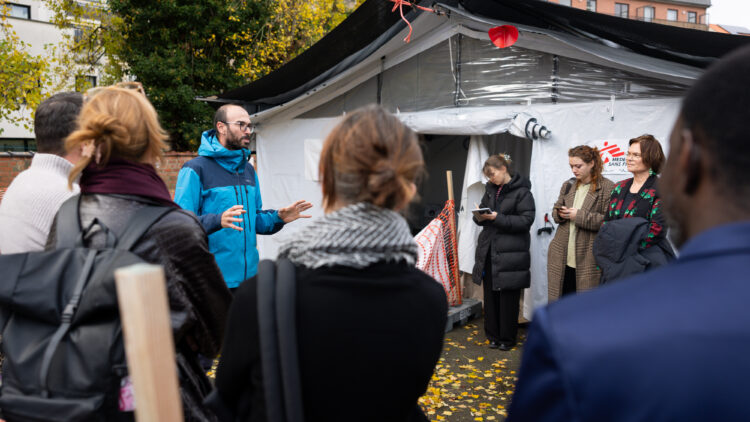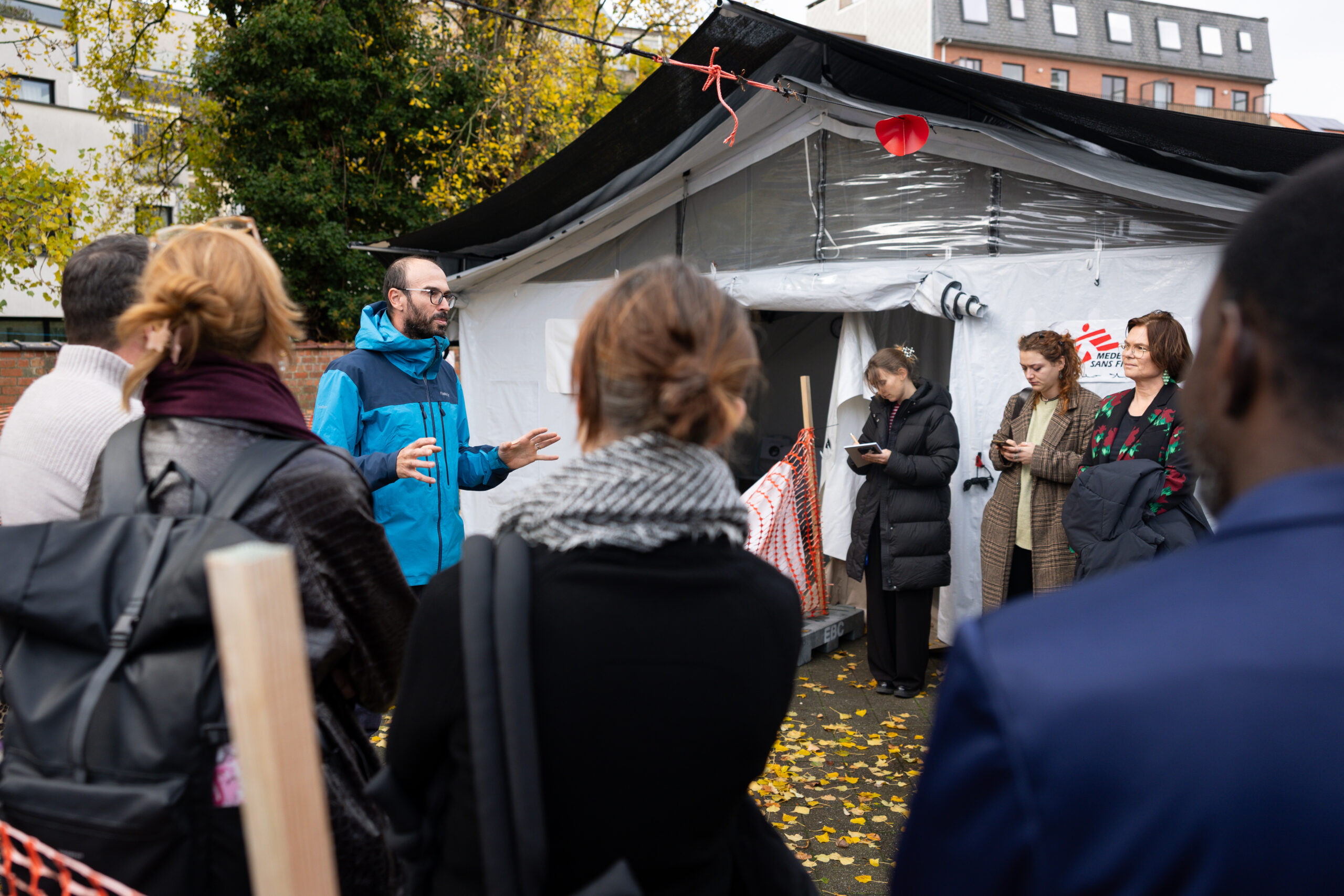
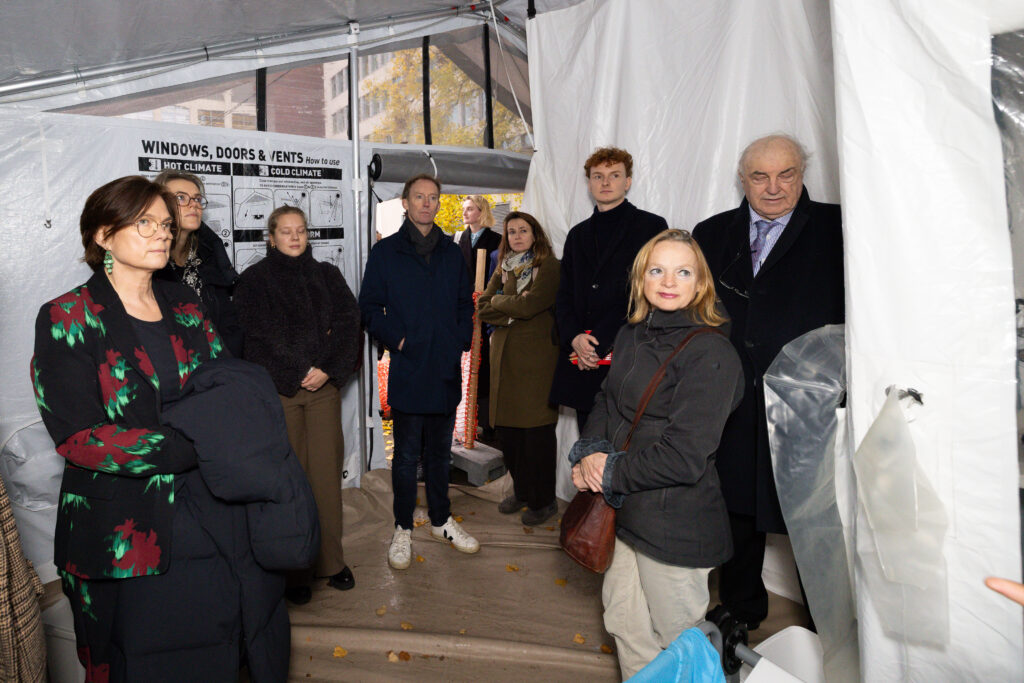
In the courtyard of MSF’s Ebola Training Centre in Brussels stands a field hospital, built to recreate the conditions MSF teams face during an outbreak. On 17 November 2026, UNITE, Médecins Sans Frontières (MSF) and Global Health Advocates brought Members of the European Parliament, policy advisers, Parliament staff and civil society representatives to see it. Among them were MEPs Barry Andrews (Renew Europe, Ireland), Chair of the Committee on Development; Charles Goerens (Renew Europe, Luxembourg); and Marit Maij (S&D, Netherlands).
Trust is part of the treatment
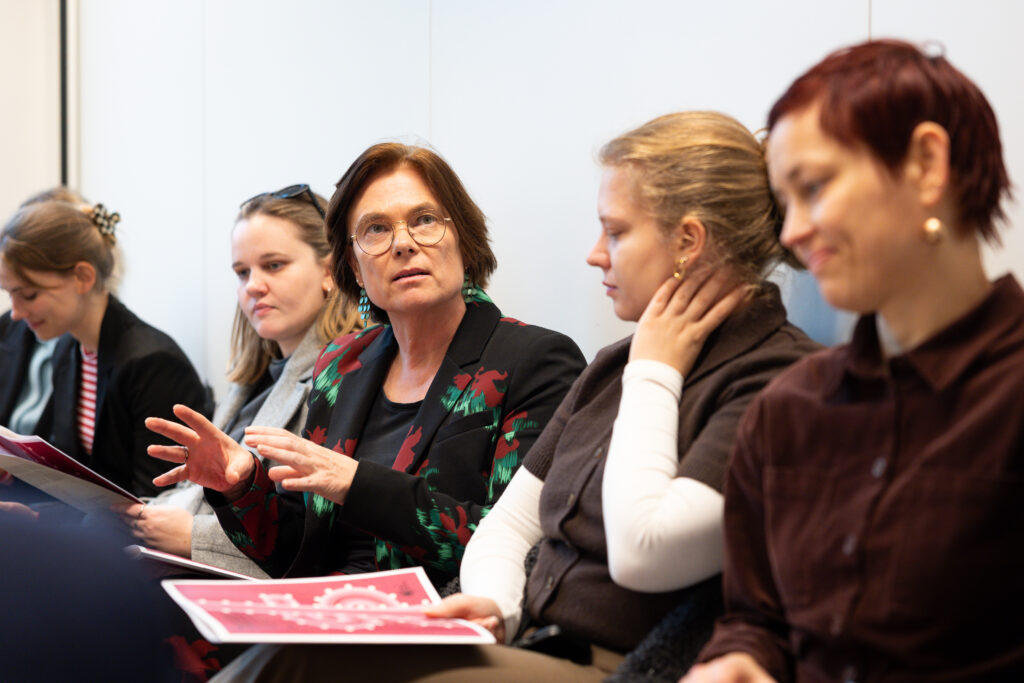
MSF staff guided participants through the facility. Step by step, they showed how a treatment centre protects medical staff, patients and their communities, while seeking to balance strict safety measures with the transparency and family contact that communities need to trust the care being given.
Medicine alone does not stop Ebola. Isolating patients, tracing contacts and burying the dead safely all depend on communities being willing to cooperate, and that depends on trust. In eastern DRC, trust is in short supply. The region is marked by armed conflict, including fighting between Hema and Lendu communities, and anything linked to the government is met with suspicion. A treatment centre seen as taking sides can be avoided altogether. That is why MSF chose a site for one of its centres that all communities recognised as neutral.
Trust also shapes how communities respond to rules that touch on deeply held traditions. Washing and touching the body of a loved one is an important part of mourning, but it is also one of the main ways Ebola spreads. Banning these rituals rarely works. What works is agreeing on alternatives with communities: in one past outbreak, mourners placed a meaningful object in the coffin instead of touching the body, finding a way to honour the dead safely. Trusted local leaders play a key role in this, and often carry more weight than any official message, especially as rumours spread quickly through WhatsApp. Participants’ questions on community mobilisation, vaccines and protecting caregivers kept returning to the same lesson: trust cannot be built in the middle of a crisis. It has to be there before it is needed.
Health security cannot be improvised
The same is true of health systems. Laboratories, surveillance, health workers and community networks cannot be built in the middle of an epidemic. They need predictable, long-term investment, just as cuts to development aid are weakening the systems that respond first .
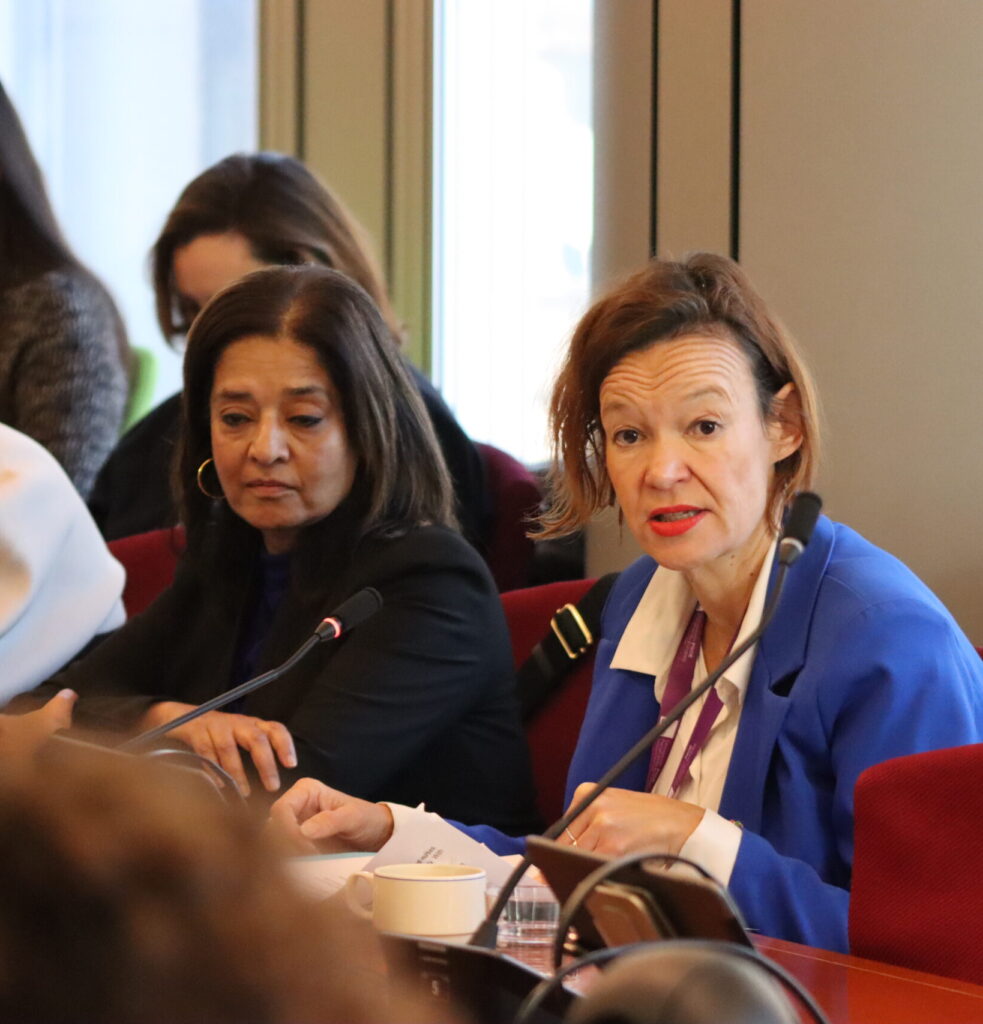
The visit followed a conversation that began at the European Parliament. On 5 November, UNITE and the Pandemic Fund held “Prevention Pays: Investing in Global Health Security”, a roundtable discussion hosted by MEP Leire Pajín (S&D, Spain), co-rapporteur on the EU’s new civil protection and health emergency instrument.
Priya Basu, Executive Head of the Pandemic Fund, explained that every dollar the Fund grants has unlocked seven more. She reminded MEPs that “the time to finance preparedness is before an outbreak becomes a headline.”
Ethiopia’s Minister of Health, Dr Mekdes Daba, described how capacities built through a Pandemic Fund project helped the country end its first-ever Marburg outbreak. Her warning applied just as much in MSF’s courtyard: “The next outbreak will not wait for us to build laboratories.”
That is why the timing of these events matters. On 26–27 November, EU leaders meet to negotiate the 2028–2034 Multiannual Financial Framework, and the draft on the table is worrying for global health. It names no successor to EU4Health. It gives the programme for civil protection and health emergency preparedness around 35% less than the Commission proposed. And it sets Global Europe, the EU’s main external funding instrument, about a fifth below the Commission’s proposal, with no spending floor for human development, the channel through which health has been funded, and no mention of health at all.
The European Parliament’s positions go considerably further. As negotiations continue, UNITE will keep working with parliamentarians to make global health a clear, properly funded priority in the next EU budget. What participants saw in a Brussels courtyard is what that budget will decide: whether the next outbreak meets a prepared system or an improvised one.