Drug Policy Desk Relaunch: Supporting Parliamentary Reform in Ghana and Malaysia

The drug policy reform debate continues to shift. Across the world, governments are moving away from purely punitive approaches to drug control, experimenting with new frameworks that prioritise public health, human rights, and evidence-based governance. The number of countries reconsidering their approach – particularly with respect to cannabis – continues to grow, and with it, the opportunity for parliamentarians to play a meaningful role in shaping that change. 

It was against this backdrop that the Drug Policy Desk was first established in 2020 as a hub to assist parliamentarians in promoting policy approaches that deliver better public health outcomes with activities across a number of countries including Ireland, Kenya, Pakistan, and Portugal. 


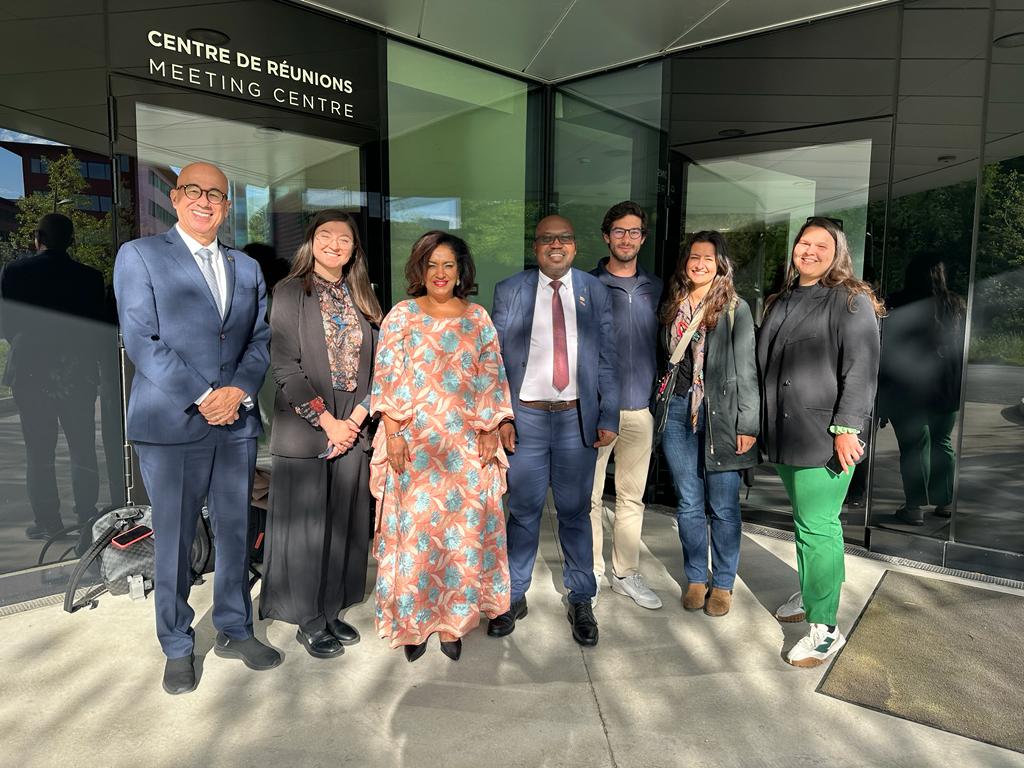
May 2023, Parliamentarians from Kenya, Mexico, Portugal and Zimbabwe attend “Current Perspectives on Drug Policy” course in Geneva.

A highlight of the desk was the introduction of Kenya’s Harm Reduction Bill in 2025 by UNITE Member, Hon. Esther Passaris, marking a major milestone in the promotion of health-centred drug policy.

Now, in June 2026, the Desk has been relaunched with a renewed and targeted focus on reform in Ghana and Malaysia.

This relaunch has been made possible through the support of the Open Society Foundations (OSF), whose longstanding commitment to evidence-based drug policy, public health, and human rights has helped create the conditions for sustained parliamentary engagement on these issues. With OSF’s backing, the Desk is positioned to serve as a bridge between research, lived experience, civil society, and legislative processes at a moment when thoughtful, evidence-driven reform is both necessary and achievable.  
 

Ghana

Ghana stands at a critical moment. The passage of the Narcotics Control Commission Act, 2020 signalled a recognition that more pragmatic, humane, and health-centred responses to drug-related issues were both possible and necessary. Yet the promise of that legislation remains unevenly realised. Gaps persist between the law as written and how it is applied: in judicial practice, institutional coordination, public health financing, and public understanding. 

11
Abdul Karim Ibrahim

UNITE Drug Policy Officer
Based in Accra, Ghana
Contact

The relaunched Drug Policy Desk will work alongside Ghanaian parliamentarians to close those gaps, strengthening oversight, supporting evidence-informed legislative action, and helping translate policy intent into meaningful change on the ground. This means facilitating dialogue across government agencies, civil society, researchers, and affected communities, and ensuring that cross-party consensus can be built around approaches that protect rights and improve health outcomes. 

Malaysia

Malaysia’s drug policy landscape is at an inflection point. Punitive approaches have long defined the country’s response to drug use, but there is growing recognition — among policymakers, public health experts, and civil society alike — that criminalisation alone cannot address the complex realities of drug dependence, harm, and social vulnerability. As governments across Asia grapple with the limitations of existing frameworks, Malaysia has an opportunity to help shape a more progressive regional conversation. 

The relaunched Desk will support Malaysian parliamentarians in engaging with these questions: contributing evidence and analysis to ongoing discussions on decriminalisation, harm reduction, and public health-centred approaches. By creating space for informed policymaking, cross-sector collaboration, and the exchange of international best practice, the Desk aims to support a drug policy framework that reduces stigma, improves access to care, and grounds decision-making in evidence rather than fear. 

What the Desk Does 

Across Ghana and Malaysia, the Drug Policy Desk will: 

  • Strengthen the capacity of parliamentarians to engage with drug policy issues through evidence, research, and policy analysis 
  • Facilitate engagement between parliamentarians, government agencies, civil society organisations, researchers, and affected communities 
  • Generate and disseminate evidence that informs legislative discussions and policy decision-making 
  • Support cross-party dialogue and consensus-building on drug policy issues 
  • Advance context-sensitive approaches that improve public health outcomes, protect rights, and strengthen governance 


Looking Ahead 

The relaunch of the Drug Policy Desk marks a renewed commitment to the idea that parliamentarians can be agents of pragmatic policy change. With the right evidence, the right networks, and the right support, they can help move drug policy in a direction that is more effective, more humane, and more grounded in the realities of the people it affects. 

We look forward to the work ahead in Ghana, Malaysia, and beyond.  

Contact our Drug Policy Officers for more details on the desks work and to explore opportunities for collaboration.  

share it